
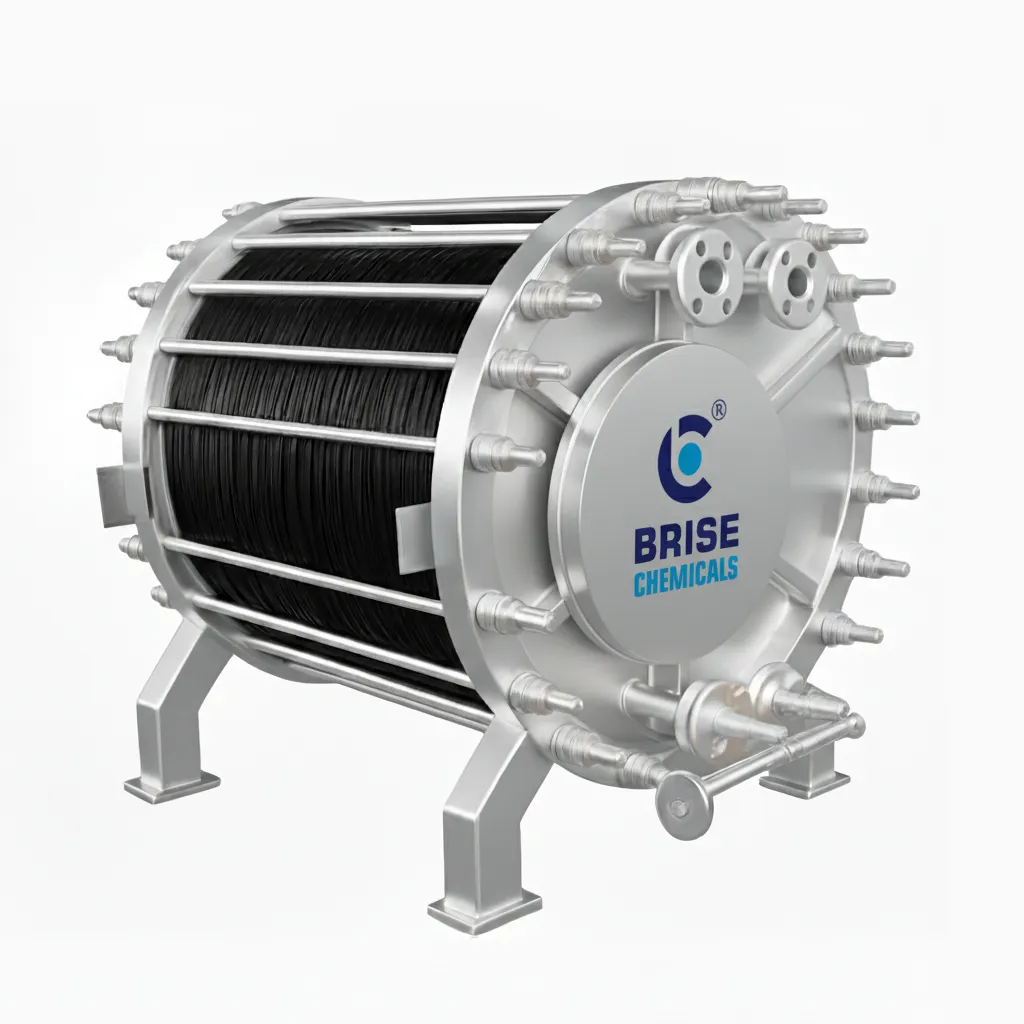
Alkaline Electrolyser Manufacturer India — Bipolar Design for Green Hydrogen Production
Brise Chemicals Pvt. Ltd. is a leading alkaline electrolyser manufacturer India, engineering high-efficiency bipolar alkaline electrolysers for green hydrogen production, industrial chemical processes, and clean energy applications.
Our electrolysers are designed for maximum efficiency, ultra-high purity output, and long operational life — trusted by industries across India and built to meet the demands of India’s National Green Hydrogen Mission.

What is an Alkaline Electrolyser?
An alkaline electrolyser is an electrochemical device which splits water into hydrogen (H₂) and oxygen (O₂) using electricity (DC) and an electrolyte solution of potassium hydroxide (KOH) or sodium hydroxide (NaOH) having 30% w/w volume.
It is the most commercially proven and widely deployed technology for large-scale green hydrogen production in the world, with decades of industrial operating history and the lowest capital cost among all electrolyser technologies.
The Basic Electrochemical Reactions:
- Cathode Reaction: 2H₂O(l) + 2e⁻ → H₂(g) + 2OH⁻(aq)
- Anode Reaction: 2OH⁻(aq) → ½O₂(g) + H₂O(l) + 2e⁻
- Overall Reaction: H₂O(l) → H₂(g) + ½O₂(g)
In plain terms: the reaction can be read as water in, hydrogen and oxygen out — with electricity as the driving force.
Technical Specifications — Brise Alkaline Electrolyser
| Parameter | Specification |
|---|---|
| Electrolyte | 30% NaOH / KOH aqueous solution |
| Stack Energy Consumption | 3.8 – 4.4 kWh/Nm³ of H₂ |
| Operating Temperature | 70 – 90 °C |
| Operating Pressure | 1-30 barg |
| Ambient Temperature | 5 – 35 °C |
| Cell Voltage | 230 – 420 V |
| Current Density | 0.2 – 0.4 A/cm² |
| Stack Current | 100 – 12000 AMP |
| Cell Active Area | 125 – 30000 cm² |
| Hydrogen Purity (H₂) | 99.99% – 99.9999% (4N to 6N Grade) |
| Oxygen Purity (O₂) | 99.99 – 99.9999% |
| Oxygen Limit in H₂ | < 2 ppm v |
| Moisture Content | < 2 ppm v |
| Stack Design | Bipolar (Pressurized) |
| Power Source | IGBT Rectifier (DC) |
| Control System | Dual-Redundant Siemens PLC + SCADA |
Our Electrolyser Technology — In-Depth
1. Bipolar Cell Stack Design
Brise Chemicals pressurized bipolar Alkaline Electrolyser Manufacturer stacks — the most efficient and compact configuration for industrial hydrogen production.
In a bipolar stack:
- Each side of the bipolar plate houses simultaneously the anode and the cathode with the diaphragm as the separating media between each electrode thus forming a cell which can be stacked together to form multilayered electrolysis cells.
- This series electrical connection of cells dramatically reduces current path resistance and ohmic losses
- The result is higher voltage efficiency, smaller footprint, and lower material cost compared to monopolar designs
Our in-house manufactured proprietary bipolar plates undergo specialized electrode coating processes to maximize catalytic surface area and reduce overpotential — the primary source of energy loss in electrolysis.
2. Pressurized Operation (1–30 bar)
Unlike atmospheric systems that require a separate compressor, our electrolysers produce pressurized hydrogen directly at 1–30 bar within the stack. This delivers:
- Elimination of external hydrogen compressor for low-to-medium pressure applications (CAPEX savings)
- Smaller downstream storage vessel requirements
- Improved gas purity due to reduced gas crossover at higher operating pressures
- Direct delivery to high-pressure end-use applications
3. Ultra-Pure Water Feed — 4-Stage Treatment
The electrolyte loop requires ultrapure water to prevent scaling, membrane degradation, and purity loss. Brise Chemicals integrates a complete 4-stage water treatment system:
Viz. Primary Filtration (Multi-Grade Sand Filter / MGF) followed by
Ultrafiltration (UF) and Double-Pass Reverse Osmosis (RO) rejecting 98–99% of total dissolved solids (TDS) and lastly Electrodeionization (EDI) Polishing to deliver ultrapure water (UPW) with:
- Conductivity: < 1 µS/cm
- Total Organic Carbon (TOC): < 30 ppb
This four-stage sequence ensures the electrolyte solution remains stable and contamination-free throughout the plant’s operational life.
4. Pressurized Bipolar Electrolysis — Stack Operation
The ultrapure water is blended with 30% w/w aqueous KOH electrolyte in the circulation loop and pumped into the bipolar cell stack.
DC power is supplied by a rectifier which converts AC power to DC. The rectifier used shall either be SCR based or IGBT based rectifiers. This rectifier provides:
- Precise DC output control for optimal current density
- Rapid response to power fluctuations from renewable sources
- High conversion efficiency (>97%) from AC grid to DC power
A specialized composite diaphragm separator is used between cathode and anode which main work includes:
- Allowing of free transfer of hydroxide ions (OH⁻) — enabling the electrochemical reaction
- Physical blocking of crossover of H₂ and O₂ gases — ensuring purity and safety
Alkaline Electrolyser Manufacturer Capabilities — Brise Chemicals India
| Capability Pillar | Focus | Key Deliverables |
|---|---|---|
| I. Core Technology OEM (Electrolyzer Stack) | Product Design & Manufacturing | Proprietary bipolar plate fabrication, specialized electrode coating, high-efficiency cell stack assembly, R&D and stack efficiency improvement |
| II. Balance of Plant (BOP) Integration | Process System Engineering | Electrolyte loop design, gas purification integration, IGBT |
| III. EPC Execution (Balance of System - BOS) | Project Construction | Electrolyte loop design, gas purification integration, IGBT rectifier specification, DC power integration, full control system Site installation, civil/mechanical construction, hydrogen-specific HSE protocols, high-purity piping QA/ QC |
| IV. Commissioning & O&M | Performance Guarantee & Reliability | Pre-commissioning, final commissioning (C&C), performance guarantee testing, client training, predictive maintenance, stack refurbishment/replacement |
Applications of Brise Alkaline Electrolysers
Industrial Hydrogen Production
On-site hydrogen generation eliminating the cost, logistics risk, and safety hazard of delivery. Continuous, reliable supply of hydrogen gas for any industrial process that consumes hydrogen.
Green Hydrogen for Fuel Cells & Mobility
Ultra-high purity (99.9999%) hydrogen for proton exchange membrane fuel cells (PEMFC) powering electric vehicles, buses, trains, ships, and stationary fuel cell power systems.
Steel Industry — Direct Reduced Iron (DRI)
Green hydrogen as a clean reducing agent replacing coal and coke in iron ore reduction — the critical pathway to net-zero steel manufacturing.
Refinery & Petrochemical Industry
High-purity hydrogen for hydrocracking, hydrotreating, and hydrodesulfurization in petroleum refineries — transitioning from grey hydrogen (SMR) to green hydrogen (electrolysis).
Green Ammonia & Methanol Production
Hydrogen as the primary feedstock for Haber-Bosch ammonia synthesis and methanol production — enabling green fertilizers and e-fuels with zero carbon footprint.
Power Generation & Renewable Energy Storage
• Power-to-Hydrogen-to-Power (P2H2P) for grid balancing • Hydrogen fuel for gas turbines and combined heat and power (CHP) • Long-duration energy storage paired with solar/wind farms
Pharmaceutical & Food Grade Hydrogen
99.9999% purity hydrogen for pharmaceutical synthesis, food processing (edible oil hydrogenation), laboratory applications, and semiconductor manufacturing.
Why Choose Brise Chemicals as Your Alkaline Electrolyser Manufacturer in India?

Industry-Leading Energy Efficiency
Our best-in-class stack achieves 3.8 kWh/Nm³ specific energy consumption — reducing electricity cost (the largest component of green hydrogen OPEX) by up to 15% compared to less efficient systems.

Ultra-High Purity
Our multi-stage gas purification train (gas-liquid separator → scrubber → De-Oxo unit → molecular sieve dryer) delivers hydrogen purity from 99.99% to 99.9999% — covering every application from basic industrial use to fuel cells and semiconductors.
Pressurized system
Integrated 1–30 bar pressurized production eliminates the need for a separate hydrogen compressor for most applications, reducing CAPEX, energy consumption, and maintenance requirements.
100% Made in India — Proprietary Technology
Brise Chemicals design and manufactures its electrolyser stacks in India with proprietary bipolar plates and electrode coating technology — no import dependency, faster delivery, lower cost, and full IP ownership.
Renewable Energy Ready
Fully compatible with solar PV, wind turbines, and hybrid renewable-grid configurations through intelligent PLC-managed variable power control.
Scalable Architecture
From small pilot stacks to multi-MW configurations — our modular stack design allows capacity expansion with minimal engineering rework.
ISO Certified Quality & Safety
ISO 9001:2015 — Quality Management, ISO 14001:2015 — Environmental Management, ISO 45001:2018 — Occupational Health & Safety, Hydrogen-specific safety design per PESO, IEC, and ATEX standards
Lifetime Support — AMC, CMC & Stack Refurbishment
Complete post-commissioning support including Annual Maintenance Contracts (AMC), Comprehensive Maintenance Contracts (CMC), and proprietary stack refurbishment and replacement services to maximize your electrolyser's operational life and performance.
Water Consumption in Electrolysis — By the Numbers
A frequently asked question — especially for project feasibility and water planning:
| Basis | Water Required per kg H |
|---|---|
| Theoretical (pure chemistry) | 9.0 liters (9.0 kg) |
| Practical (industrial system) | 10 – 11 liters |
| Including cooling water (closed loop) | 15 – 18 liters total water circuit |
The additional 1–2 liters (vs theoretical) accounts for:
- Water lost during DM/EDI water treatment purification stages
- Minor evaporation in the gas-liquid separation circuit
- Cooling circuit makeup water
Electrolyser Performance Under Variable Power (Solar / Wind)
A critical capability for green hydrogen projects:
| Power Input Level | System Response |
|---|---|
| 100% rated power | Both stacks operating at full capacity |
| 50–100% rated power | Both stacks operating at reduced current density |
| 20–50% rated power | One stack in hot-standby, one at reduced load |
| < 20% rated power | Safe shutdown with automatic restart protocol |
| Power restored | Automatic ramp-up, standby stack reactivation |
This intelligent equal distribution control strategy via dual-redundant Siemens PLC ensures:
- No hydrogen production is wasted during power fluctuations
- Electrolysis always operates in the safe, efficient current density band
- Minimum wear on stack components during partial-load operation
Electrolyser Project Execution — End-to-End by Brise Chemicals
| Phase | What Brise Chemicals Delivers |
|---|---|
| Pre-FEED / Concept | Technology selection, capacity sizing, site assessment, energy balance |
| FEED Study | Front-End Engineering Design, P&ID, plot plan, equipment list, CAPEX estimate |
| Basic Engineering Package (BEP) | Detailed process design, instrumentation philosophy, safety study |
| Detailed Engineering | Construction drawings, equipment datasheets, 3D model |
| Procurement & Supply | Electrolyser stack, BoP equipment, electrical panels, instruments |
| Construction & Installation | Civil, mechanical, piping, electrical, instrumentation installation |
| Commissioning | Pre-commissioning checks, wet commissioning, performance guarantee testing |
| Training | Client operations and maintenance team training |
| AMC / CMC | Long-term maintenance contracts, predictive maintenance, stack O&M |
Frequently Asked Questions (FAQ)
What is an alkaline electrolyser and how does it work?
An alkaline electrolyser Manufacturer india is an electrochemical device that splits water into hydrogen and oxygen gas using DC electricity and a liquid alkaline electrolyte (KOH or NaOH). DC current is applied across a bipolar cell stack — at the cathode, water molecules are reduced to produce hydrogen gas and hydroxide ions; at the anode, hydroxide ions are oxidised to produce oxygen gas. A porous diaphragm separates the two gases while allowing ions to pass, maintaining gas purity and safety.
Which company manufactures alkaline electrolysers in India?
Brise Chemicals Pvt. Ltd., based in Pune, Maharashtra, We are bipolar alkaline electrolysers Manufacturer for green hydrogen production. They design and fabricate proprietary bipolar stacks with in-house electrode coating technology, offering systems from small pilot scale to multi-MW industrial capacity. They are ISO 9001, ISO 14001, and ISO 45001 certified.
What is the efficiency of Brise Chemicals' alkaline electrolyser?
Brise Chemicals' alkaline electrolysers Manufacturer Stack achieve a specific energy consumption of 3.8 to 4.4 kWh per Nm³ of hydrogen — placing them among the most efficient industrial alkaline electrolysers available in India. Lower kWh/Nm³ directly reduces hydrogen production cost per kilogram.
What is the difference between alkaline and PEM electrolysers?
Alkaline electrolysers use a liquid KOH/NaOH electrolyte and conduct hydroxide ions (OH⁻), use non-precious nickel-based catalysts, and have lower CAPEX — making them ideal for large-scale, continuous industrial hydrogen production. PEM electrolysers use a solid polymer membrane, conduct protons (H⁺), use expensive platinum/iridium catalysts, and respond better to rapidly variable power — making them preferred for smaller-scale renewable energy integration where dynamic response is critical.
What purity hydrogen does an alkaline electrolyser produce?
Brise Chemicals' Alkaline Electrolyser Manufacturer produce hydrogen at 99.99% (4N) to 99.9999% (6N) purity after passing through the complete gas purification train: gas-liquid separator, scrubber, catalytic De-Oxo unit, and molecular sieve dryer. Oxygen content in the hydrogen stream is maintained below 2 ppm(v) and moisture below 2 ppm(v).
How much does an alkaline electrolyser cost in India?
The cost of an alkaline electrolyser depends on capacity (kW/MW), operating pressure, purity requirements, and site conditions. At commercial scale, alkaline electrolyser systems range from ₹2.5 crore to ₹8 crore per MW depending on configuration. For a precise quotation customized to your project, contact Brise Chemicals at sales@brisechemicals.com or +91 8956727434.
Can an alkaline electrolyser run on solar power?
Yes. Brise Chemicals' Alkaline Electrolyser Manufacturer are fully compatible with solar PV and wind energy as power sources. The integrated Siemens PLC control system uses an equal distribution control strategy to safely manage variable DC power inputs from renewable sources, routing power to active stacks while placing others in hot-standby during low generation periods.
What is the operating pressure of an alkaline electrolyser?
Brise Chemicals' Alkaline Electrolyser Manufacturer operate at 1 to 30 barg (gauge pressure). Pressurized operation produces hydrogen at elevated pressure directly from the stack, eliminating the need for a separate low-pressure compressor in many applications, reducing CAPEX and energy consumption.
What is current density in an alkaline electrolyser?
Current density (measured in A/cm² or mA/cm²) is the electrical current applied per unit of active electrode area in the electrolyser cell. Brise Chemicals' stacks operate at 0.2 to 0.8 A/cm². Higher current density increases hydrogen production rate but also increases cell voltage (and energy consumption). Operating at the optimal current density (typically 0.4–0.6 A/cm²) balances production rate with energy efficiency.
How many liters of water are needed to produce 1 kg of hydrogen?
Theoretically, 9 liters (9 kg) of pure water produce 1 kg of hydrogen. In real industrial systems, this rises to 10–11 liters to account for losses in water treatment and purification. For project water planning, Brise Chemicals recommends budgeting 15–18 liters per kg H₂ when including closed-loop cooling circuit makeup water.
Related Products & Services
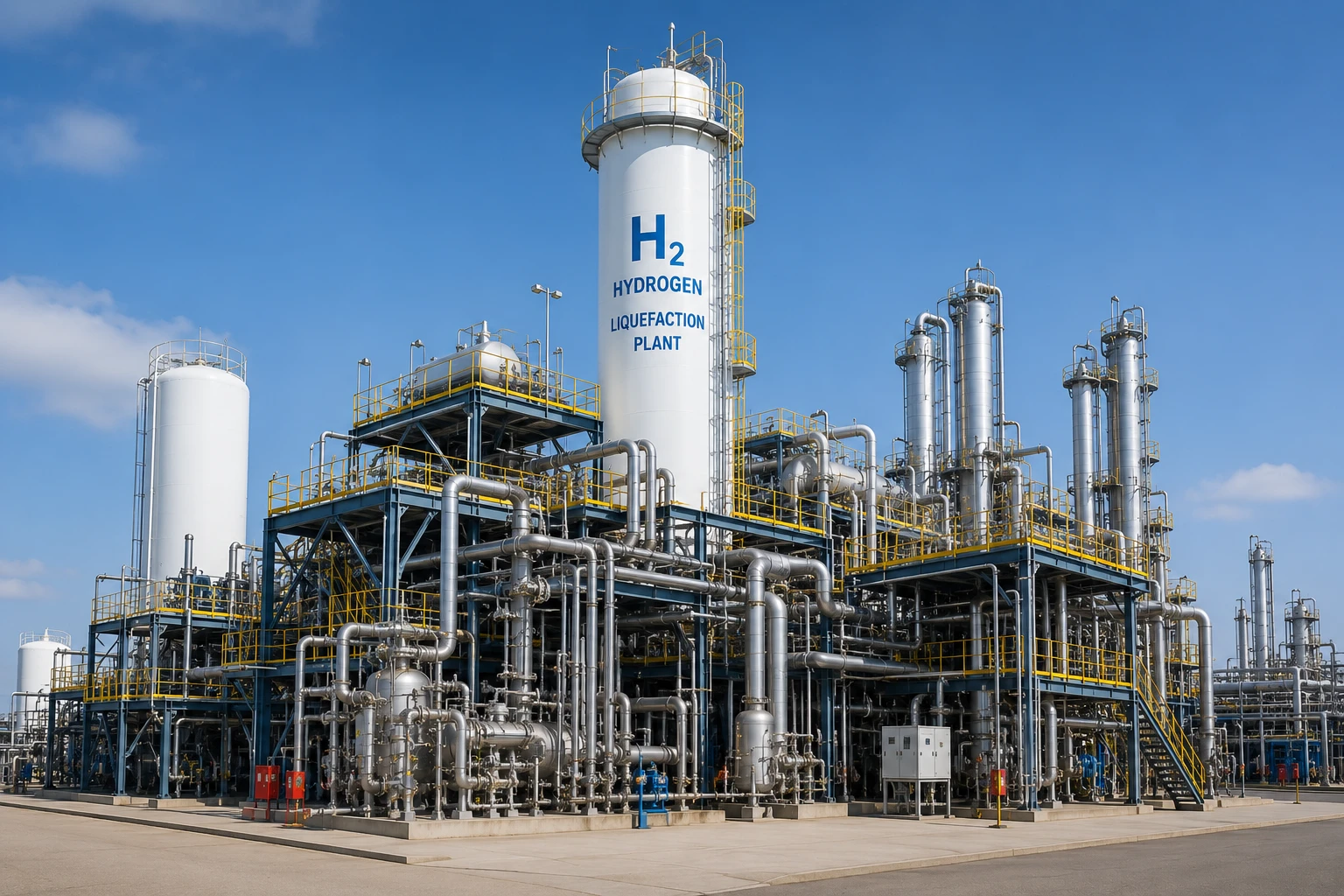
Hydrogen Liquification
The transition toward a sustainable global energy landscape heavily relies on hydrogen as a primary storage medium, stepping in to
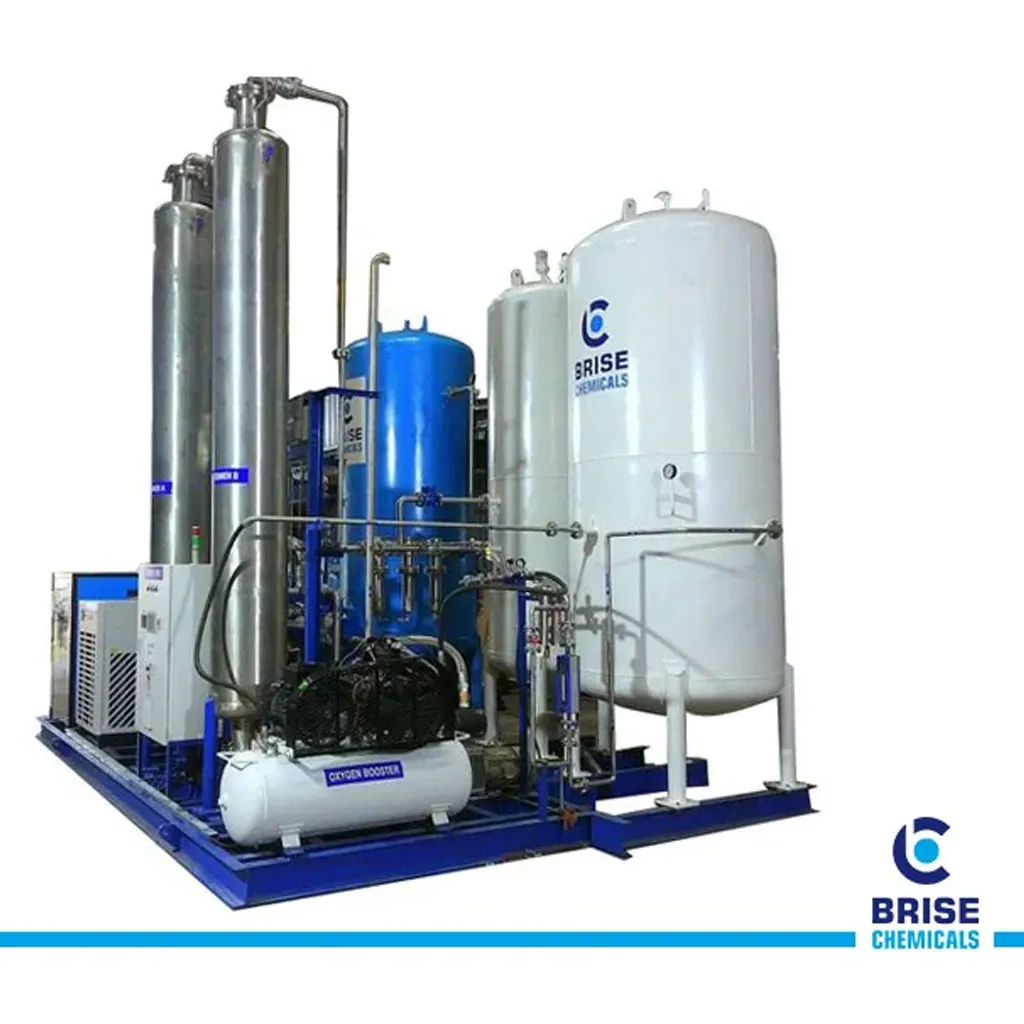
Industrial Oxygen
Our Industrial Oxygen Generator Plants are designed to deliver consistent, high-purity oxygen directly at the point of use—helping industries improve
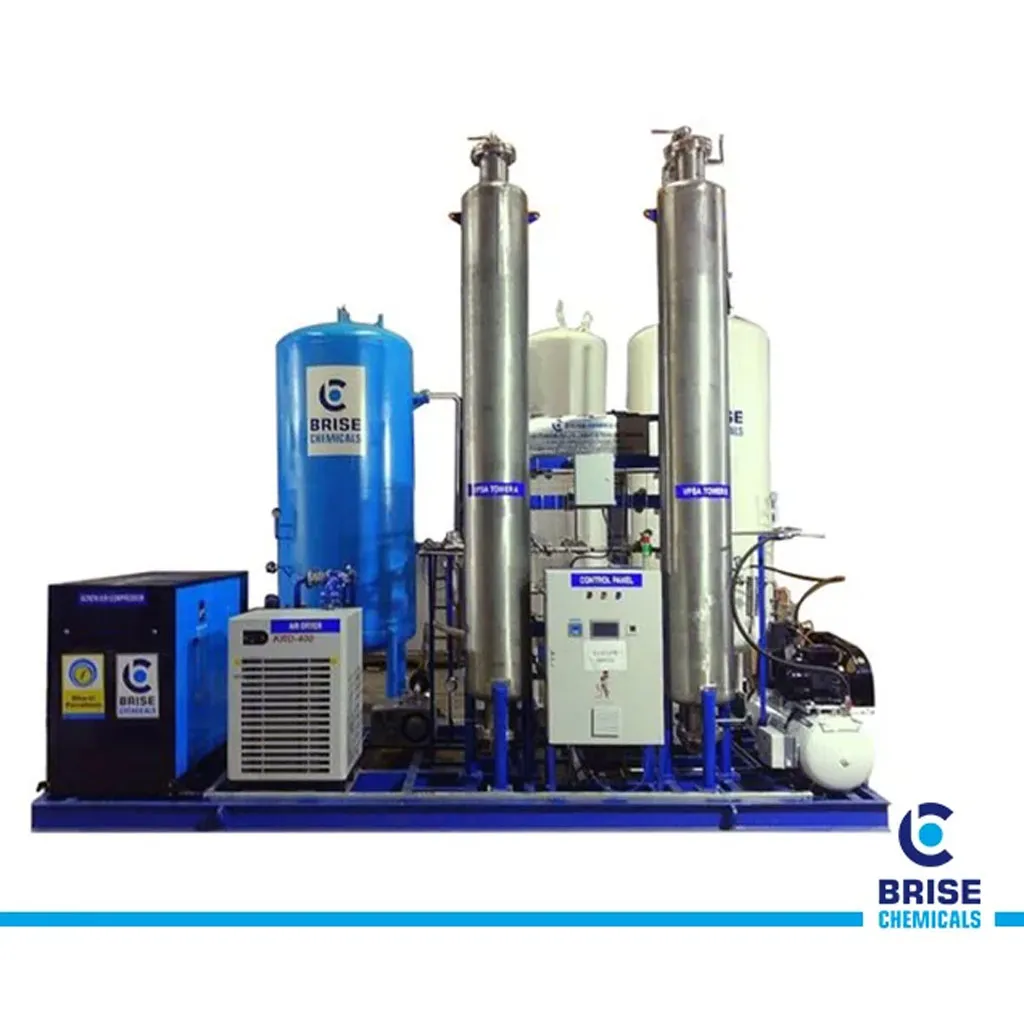
Medical Oxygen
Reliable PSA/VSA technology providing a continuous on-demand supply of 93%-96% purity oxygen while reducing costs by up to 80%.
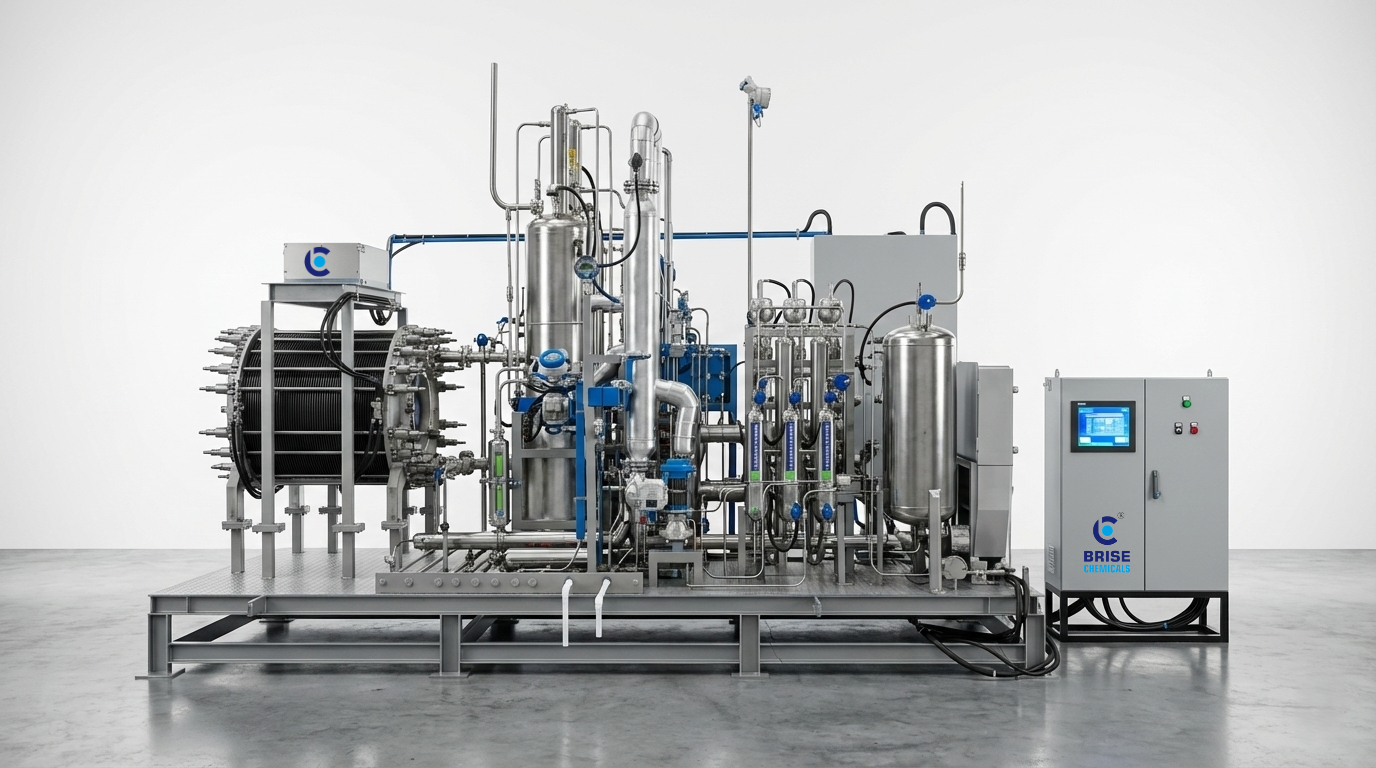
Balance Of Plant
At Brise Chemicals Pvt. Ltd., our Balance of Plant (BoP) solutions form the backbone of reliable, safe, and efficient industrial
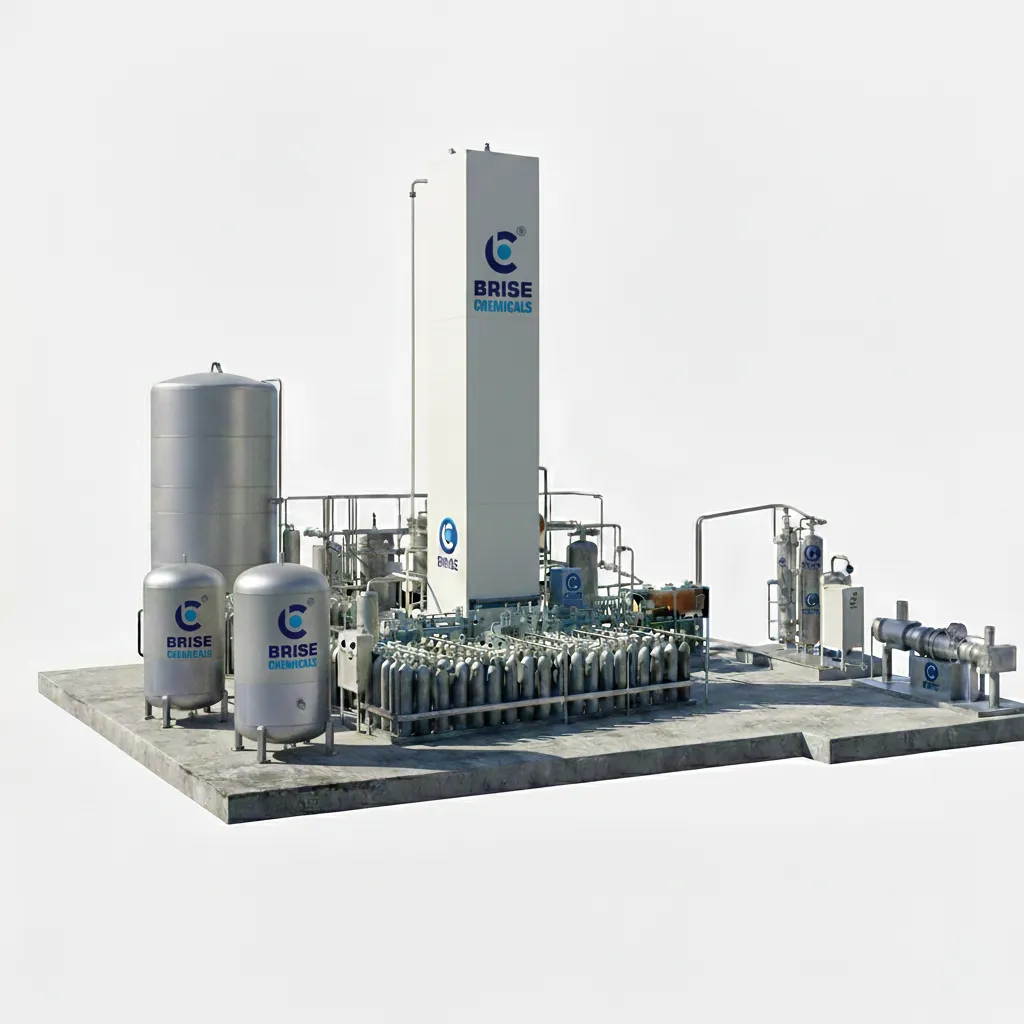
Air Separation Unit
Large-scale cryogenic plants engineered for the high-volume production of liquid oxygen, nitrogen, and argon with low specific power consumption.
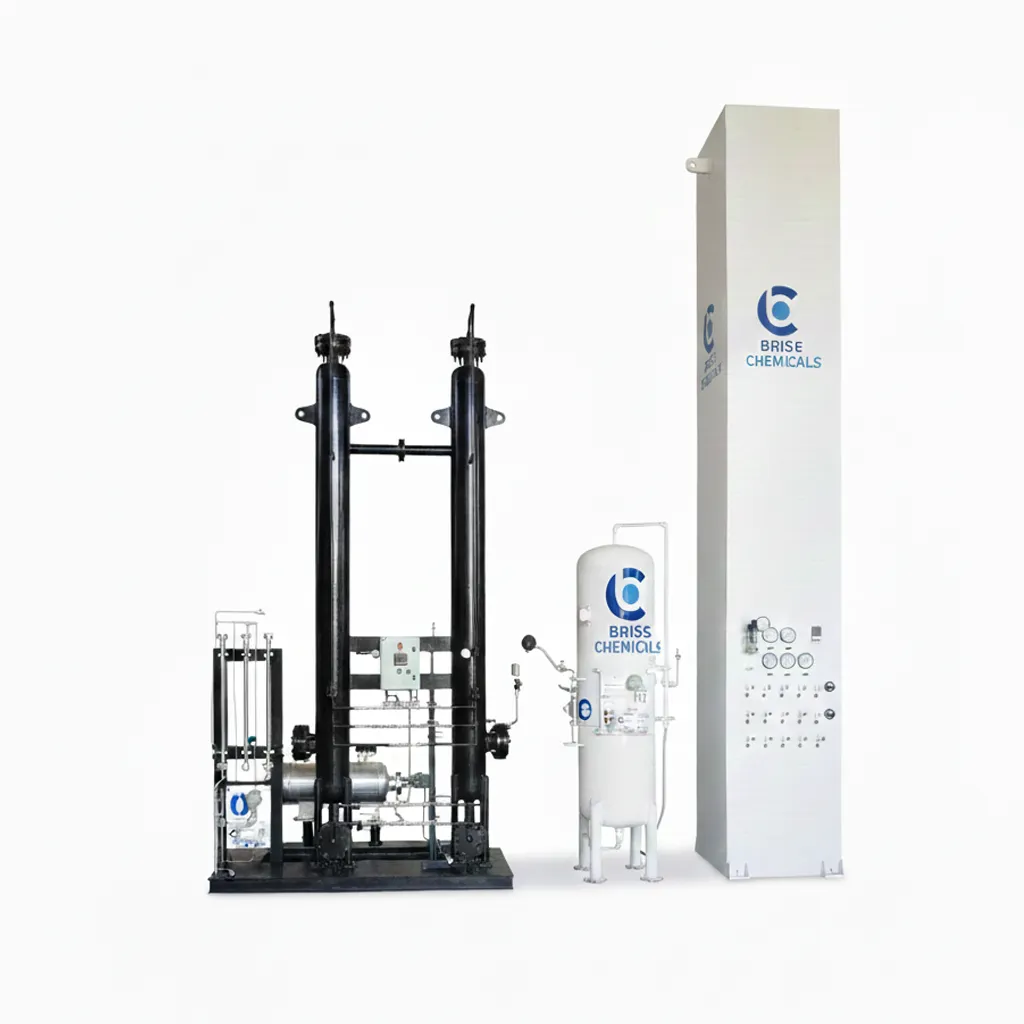
Purification Plant (CH4, CO2)
Dual-plant adsorption technology for methane enrichment of biogas and high-value carbon dioxide recovery for commercial use.
